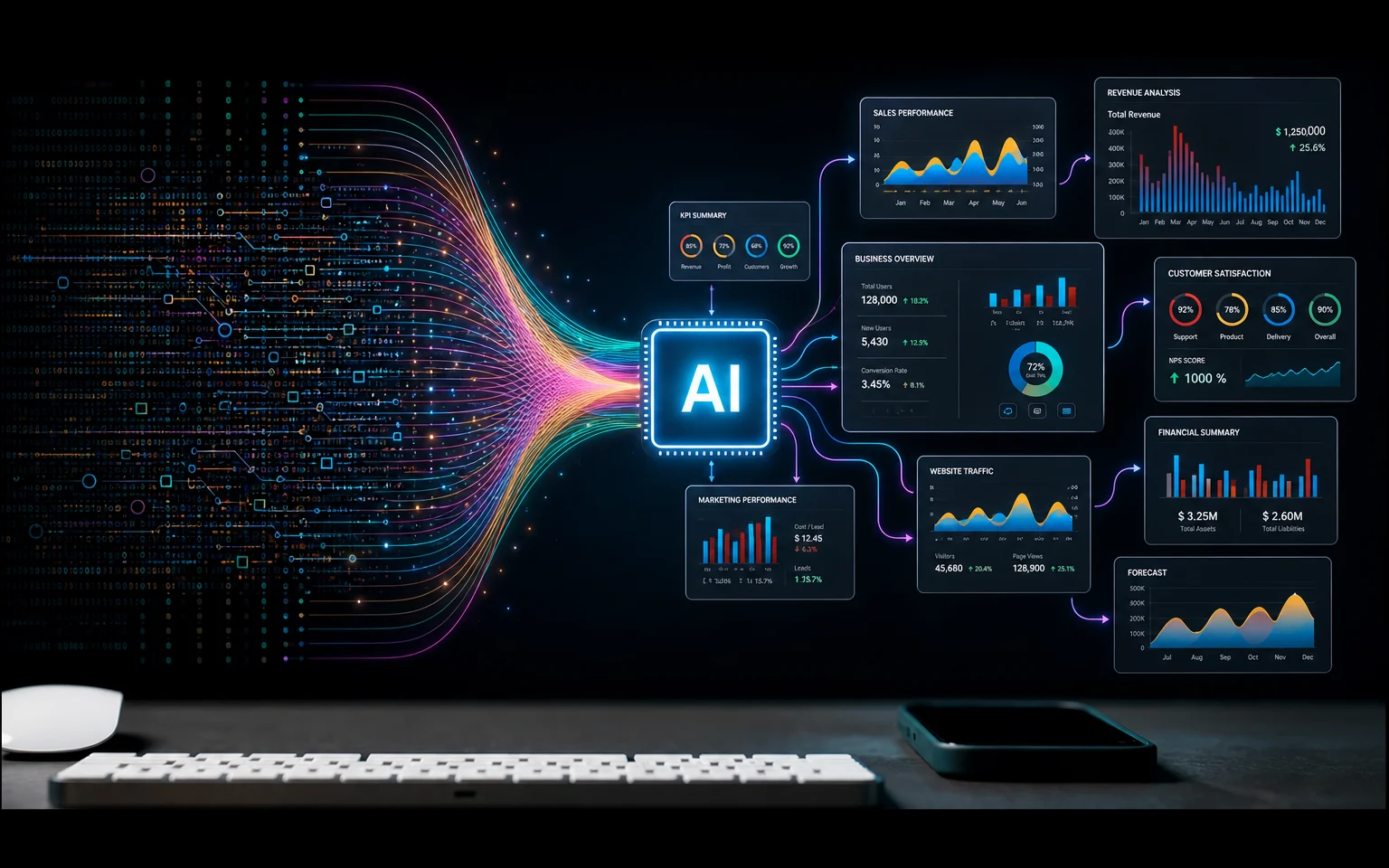


Enterprise conversations today are dominated by one phrase: Agentic AI.
Across boardrooms and innovation labs, organizations are experimenting with copilots, autonomous agents, and AI bots capable of resolving tickets, recommending actions, and orchestrating complex processes. The promise is real — AI that doesn't just generate insights, but takes meaningful action.
Here's the uncomfortable truth: most enterprises are architecturally unprepared for the agentic future they're trying to build. They're investing in intelligence but missing the execution fabric that makes intelligence actionable.
More Bots, More Complexity
Many enterprises have already done significant digital groundwork. They've automated workflows, integrated systems via APIs, built data lakes, and introduced AI into select processes. On paper, they look ready.
But when AI agents are layered onto this landscape, the cracks appear fast. Fragmented data access, inconsistent context across systems, governance gaps, and manual exception handling defeat the entire purpose of automation.
Agents without architectural cohesion don't create transformation. They amplify fragmentation.
If AI is going to act autonomously across IT, HR, customer operations, and finance, it needs a unified execution layer to operate on. That layer is Workflow Data Fabric.
What is Workflow Data Fabric?
Workflow Data Fabric is a unifying architectural construct that connects enterprise data (structured and unstructured), APIs and services, operational workflows, external data sources, and AI models — into a cohesive execution ecosystem.
At its core, it enables a simple but powerful loop:
Connect → Understand → Act
- Connect — Unified access to enterprise-wide data, from legacy systems to cloud platforms
- Understand — Contextual intelligence through AI models, rules engines, and process intelligence
- Act — Governed, auditable execution through orchestrated workflows aligned to business outcomes
Put plainly:
Five Capabilities That Determine Whether You Scale or Stall
Decision-makers often ask the wrong question when evaluating AI readiness. The question isn't "How good is our model?" It's "Do we have the five capabilities that let a model act safely at enterprise scale?"
1. Enterprise Data Unification
Most enterprises have data. Few have accessible data. Structured records sit in ERP systems. Unstructured knowledge lives in documents, emails, and support tickets. AI agents need both — in real time, in context, with governance intact. Without unified data access, agents hallucinate, contradict existing records, and create decisions that can't be defended in a compliance audit. The business cost isn't just technical. It's reputational.
2. Workflow Harmonization
Departments run on different tools, different logic, and different approval structures. When agents operate across functions — IT, HR, finance, customer operations — without a harmonized orchestration layer, they encounter conflicting rules and produce conflicting outcomes. Workflow harmonization doesn't mean standardizing everything. It means creating a shared execution language across the enterprise that agents can navigate without breaking.
3. AI-Integrated Orchestration
The most common — and most expensive — mistake enterprises make is treating AI as a layer on top of workflows rather than intelligence embedded within them. When AI sits outside the workflow, it recommends. When it's embedded inside, it acts. The difference determines whether your AI program generates reports for humans to action, or closes loops autonomously. Only the latter scales.
4. Governance-by-Design
Governance cannot be retrofitted onto agentic systems. By the time a compliance team audits an agent's decisions, the decisions have already been made — at speed, at volume, across multiple systems. Governance must be intrinsic to execution: policy enforcement embedded at every orchestration layer, audit trails generated automatically, and anomaly detection running in real time. This is not an IT concern. It is a board-level risk management imperative.
5. Change Enablement and Adoption Strategy
The capability most frequently cut from transformation budgets — and most frequently responsible for program failure. Agentic AI doesn't remove humans from processes. It redefines what humans do within them. Enterprises that invest in change enablement — retraining roles, redefining escalation responsibilities, building AI literacy at the management layer — see adoption. Those that don't see resistance, workarounds, and shadow automation that undermine everything the fabric was built to prevent.
These five capabilities are not a wishlist. They are the minimum viable architecture for responsible agentic AI.
Architecture Matters at Every Maturity Stage
One misconception worth addressing: Workflow Data Fabric isn't only relevant for organizations with advanced AI programs. It's foundational across all maturity stages.
- AI Exploration — Early copilot deployments stay structured and scalable from day one
- Process Automation — Existing workflow assets become AI-ready rather than requiring replacement
- AI-Augmented Operations — AI recommendations align with business policies and risk controls through built-in orchestration
- Agentic Enterprise — Fully autonomous agents operating across domains require unified data access, governance frameworks, and orchestration engines — the very core of Workflow Data Fabric
The journey to agentic AI may vary. The need for execution cohesion does not.
The Strategic Asset Already in Your Hands
Every digitized workflow in your enterprise encodes something valuable: approval logic, SLA definitions, governance rules, escalation paths, and system integrations. These aren't legacy constraints. In the agentic era, they are your most undervalued strategic assets.
Workflow Data Fabric doesn't ask you to rebuild. It asks you to orchestrate, connecting AI agents to the execution infrastructure you've already invested in, extending it with intelligence, and governing it at scale.
The Decision That Defines the Next Decade
Most start with the technology and work forward. The ones that succeed start with the question: what does our enterprise need to be true for AI to act reliably, safely, and at scale across every function and work backward from there.
The answer to that question is an architectural one. It lives in how data is connected, how workflows are governed, how intelligence is embedded, and how human judgment is preserved where it matters most. None of that is resolved by procuring a better model or deploying another agent.
What separates an AI program that compounds, delivering measurably more value each quarter, from one that plateaus at the pilot stage is almost never the quality of the intelligence. It is the quality of the infrastructure that intelligence is asked to operate on.
That infrastructure is a choice. And in 2026, it is a choice that still has a window.
iOPEX: Where Workflow Data Fabric Becomes Operational Reality
Workflow Data Fabric is a ServiceNow-native capability. Most enterprises that have ServiceNow already have the foundation, but haven't activated it with the architectural intentionality the agentic era demands.
iOPEX specializes in exactly this activation.
As a ServiceNow implementation partner, iOPEX designs and deploys Workflow Data Fabric architectures that connect enterprise data sources, Salesforce, SAP, Snowflake, SharePoint, Oracle, and beyond, directly into ServiceNow workflows via zero-copy connectors. No data duplication. No lag. No blind spots. AI agents working in a live enterprise context, inside the workflow, where decisions actually happen.
The intelligence layer elevAIte - iOPEX's GenAI platform, built natively on ServiceNow, doesn't sit beside your operations advising from a distance. It lives inside them, embedded within IT, customer, revenue, and finance workflows, continuously reading operational signals, driving contextual decisions, and closing loops without waiting for human handoffs.
The result is an always-on intelligence layer that is:
- Workflow-native — agents operating within your existing ServiceNow process logic, not bolted on top of it
- Fabric-connected — live data from across your enterprise accessible in every agent decision, in real time
- Governed by design — every action traceable, every decision auditable, every exception managed within defined business rules
- Built on what you already have — your existing ServiceNow workflows and integrations are the foundation, not an obstacle
This is the difference between an AI program that pilots endlessly and one that executes continuously.
If your enterprise runs on ServiceNow and your AI ambition has outgrown your current architecture — let’s connect.