


Operational Intelligence,
Engineered on Databricks

Agentic Marketing Ops for Communications, Media, Entertainment & Gaming
Running natively on the Databricks Data Intelligence Platform, DemandPilot delivers purpose-built agentic workflows across your complete marketing lifecycle.
Entirely inside your Unity Catalog perimeter, with a CFO-defensible value ledger mapping every agent action to business outcomes.
Live footprint
30+
CMEG active engagements
$1B+
annual ad revenue operated
10x
faster plan-to-launch-to-measurement
70%
reduction in optimization time
Ideas wait
Testing backlogs move slower than the market. Hypotheses are inconsistent and measurement is often an afterthought.
Plans fragment
Budget, audience, inventory, channel and creative decisions are made across separate teams and tools.
Optimisation lags
Teams discover pacing, fatigue or underperformance after meaningful spend has already been consumed.
Learning evaporates
Post-campaign reports explain history, but insights rarely become the next test, plan or action automatically.
Sandbox Pilots to Sustained Execution
Enterprise Reality (Why Value Stalls)
The iOPEX Execution Engine
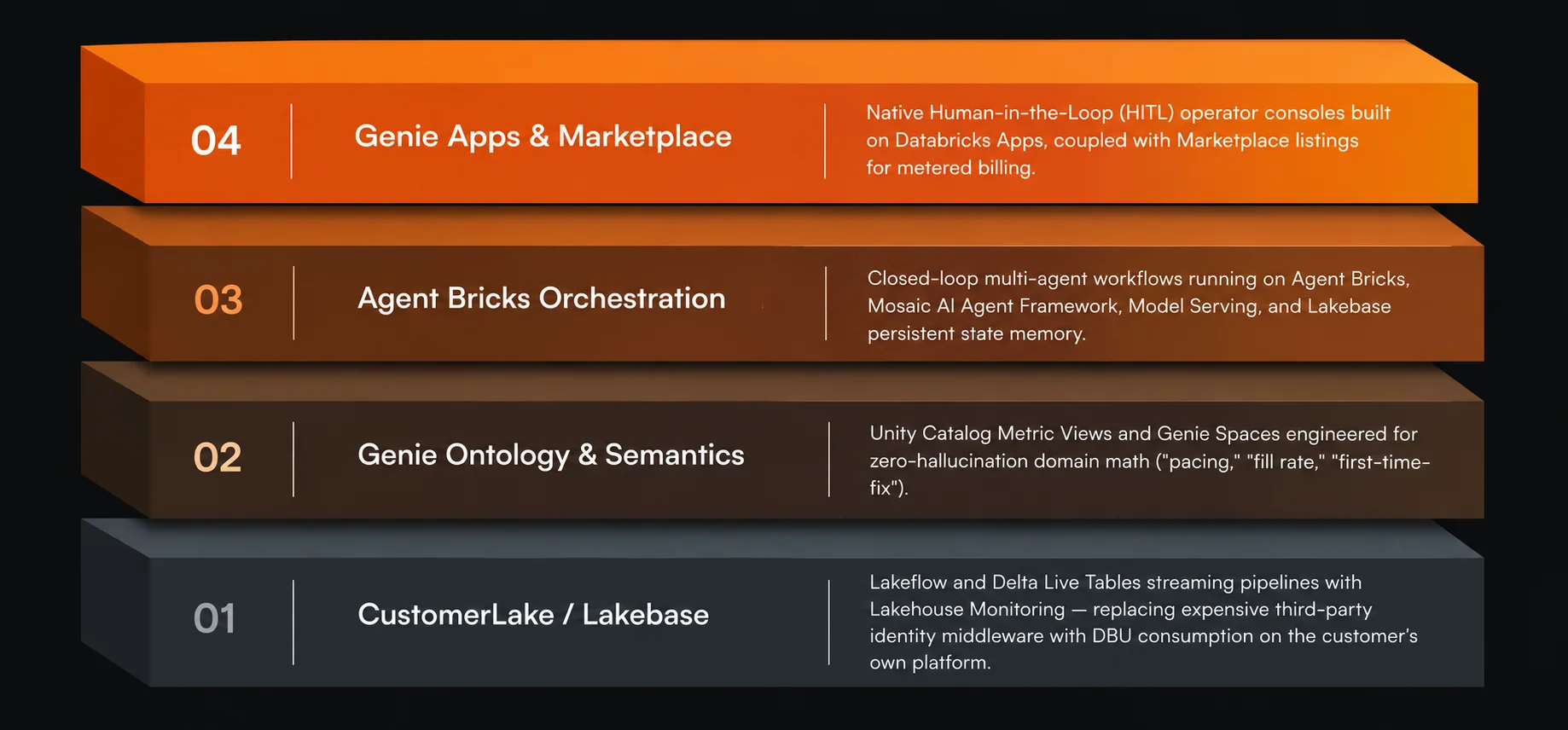
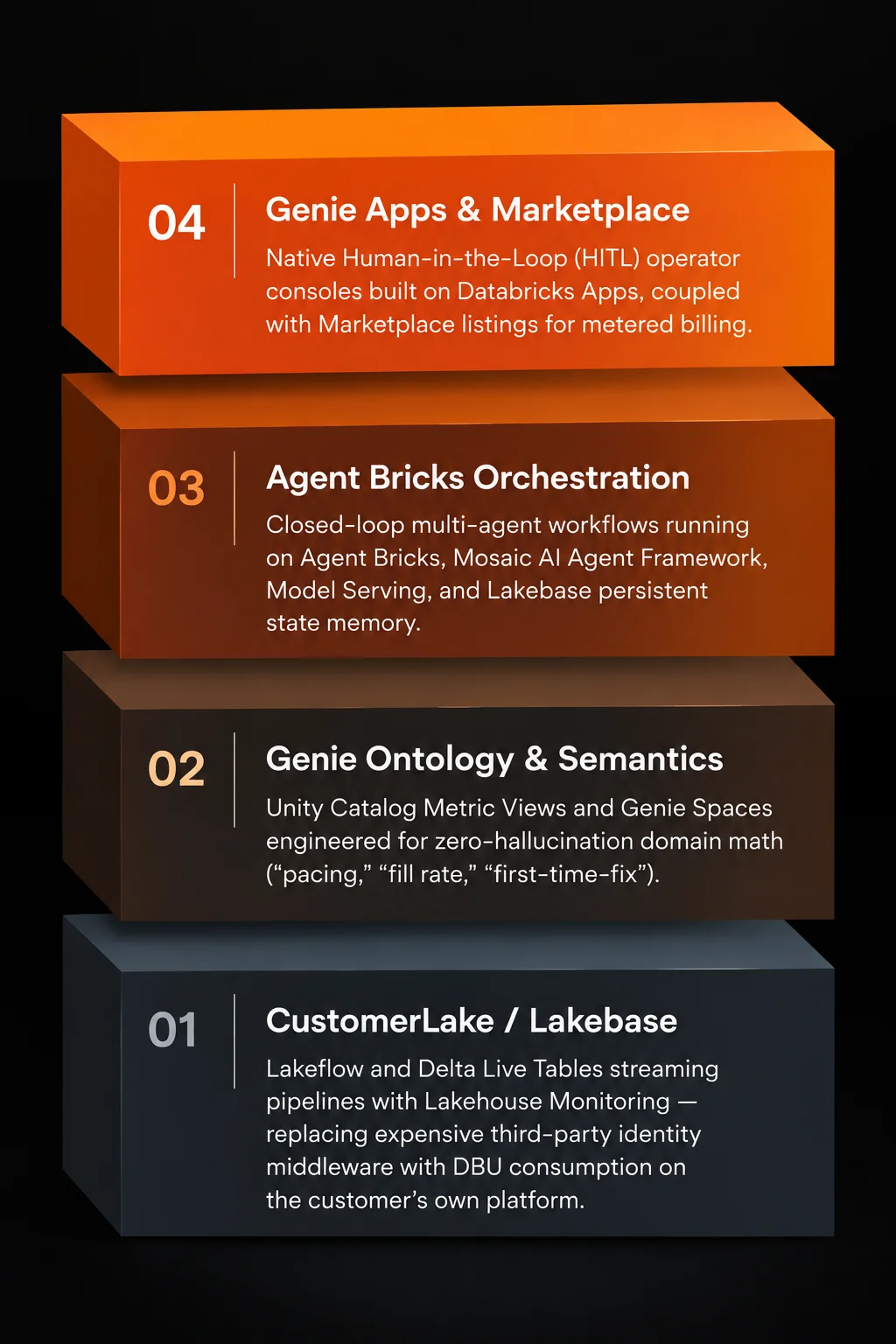
The Native 4-Layer Databricks Accelerator Stack
Full-Lifecycle Delivery & Governance
Enterprise frameworks engineered to translate Databricks platform capabilities into measurable production outcomes
Capability Pillars

Data & AI Strategy

Agentic AI Architecture

Data 360 + Lakehouse

Governance & MDM

Analytics & AI/BI
Deployment & Operational Model
4–6 Week FDE Sprint Pods
Embedded Forward Deployed Engineer (FDE) pods configure backend data schemas, Lakeflow pipelines, and Unity Catalog governance—deploying live production workloads within 30 days.
4 Automated Quality Gates on Medallion Architecture
Zero revenue-data variance guaranteed, plus continuous drift enforcement across schema, model, and consumption layers
130+ Pre-Built Production Agents
Pre-configured agentic patterns across 8 enterprise verticals—eliminating custom-build delays and accelerating time-to-value.
24/7 Always-On Managed Operations
Ongoing human-in-the-loop governance, model drift monitoring, and outcome-linked SLAs.


