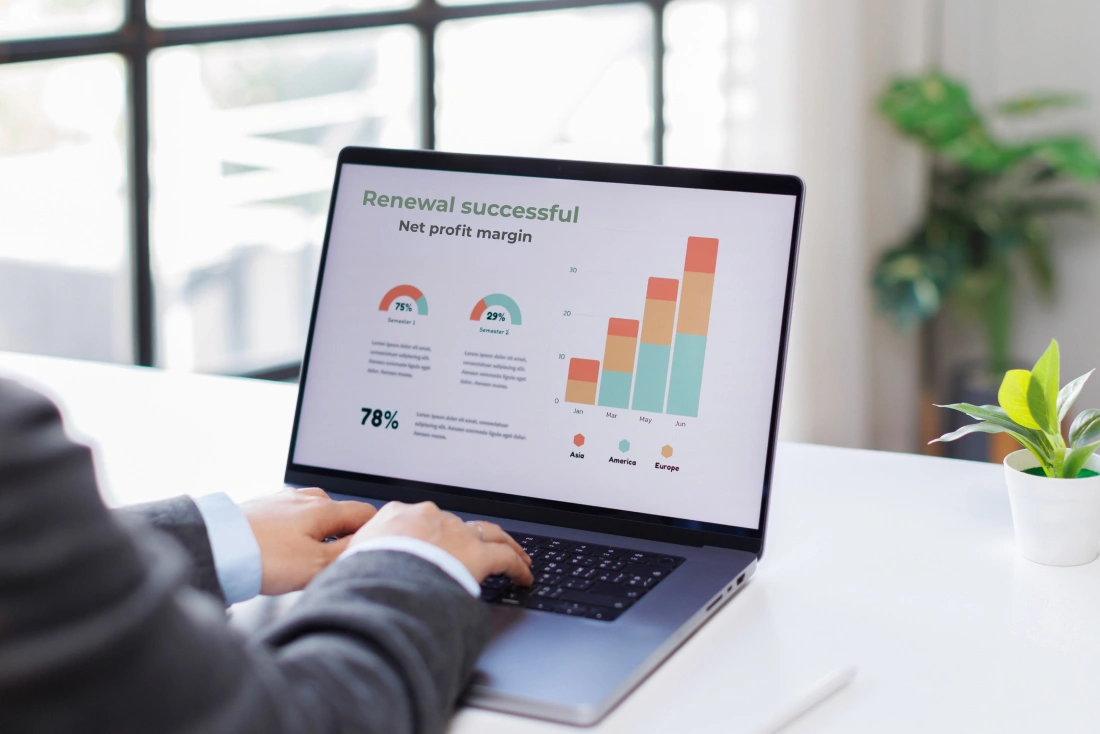


Here is something worth sitting with before any AI conversation: a red health score has never renewed a contract. A CSM (Customer Success Manager) still had to open it, interpret it, write the email, log the call, and route the escalation. The dashboard told you something was wrong. Everything after that was still manual.
That gap, between knowing and doing, is what agentic AI is closing. Not only by making dashboards smarter. But also by removing the step where a human has to translate a signal into an action.
Why the Dashboard Era Hit a Ceiling
The health score model was a real solution to a real problem. CSMs cannot hold 200 accounts in their heads. Software can. So the field built a generation of tooling that held account state, surfaced exceptions, and told CSMs where to look. It worked, within limits.
The limit is the long tail. In most B2B SaaS portfolios, accounts below $10K ACV (Annual Contract Value) make up 70–80% of the customer base by count. The economics don't support assigning a human CSM to each one. So those accounts get a digital-touch program, an email cadence, and whatever the health score catches before renewal. Long-tail churn rates in exposed categories are now tracking toward 20–30%, up from a 10–15% baseline driven by replacement pressure from AI-native tools and compression from copilots bundled into horizontal suites.
More accurate reporting on a faster-churning segment doesn't fix the segment. That's the ceiling.
Four Modes, Not One Decision
The framing that's collapsing inside CS orgs right now is binary: AI or not AI. The teams deploying agents in production in 2026 aren't thinking that way. They're mapping workflows to decision authority.
Four modes describe where any given workflow can sit.
Observe - the system surfaces state. This is the dashboard era. It's not going away; it's just no longer the finish line.
Advise - the system recommends the next action and waits for a human to execute. Most CS teams running a first AI pilot land here.
Co-Pilot - the system drafts the work product. The outreach email, the renewal proposal, and the QBR brief. A human reviews and approves before anything leaves the building.
Autopilot - the system executes within a defined policy, logs the action, and escalates only when confidence drops or a guardrail triggers.
The same platform can sit in different modes for different workflows. A payment failure dunning sequence belongs in Autopilot from week one. A discount request above a threshold, a contract modification, an escalation at a $2M named account, those stay in Co-Pilot or stay fully human. The question is "which workflows, at what decision boundary, with what guardrails should be automated?"
What Stays Human
This part matters more than the automation conversation, and it gets less airtime.
What moves to agents:
Health scoring, check-in sequences, CRM enrichment, meeting summaries, renewal outreach on the long tail, whitespace detection, escalation routing, and onboarding orchestration. These are high-frequency, low-variance tasks. Agents don't get tired. They don't deprioritize a $7K account because a $400K renewal is also due this month.
What stays with humans:
Executive relationships, QBR conversations where something important is actually being negotiated, crisis judgment calls, product feedback synthesis, any account where the revenue concentration or reputational exposure is asymmetric.
TSIA's current guidance is direct
Reskill CSMs toward strategic advisory and complex problem-solving. The role narrows around judgment. The volume moves to agents. The CSM-to-ARR ratio, historically around $2M per CSM, stops being the binding constraint on portfolio design. That's meaningful for boards trying to understand CS headcount math.
Three Objections CS Leaders Are Answering
"Customers will know they're talking to AI." They already do. Talkdesk's January 2026 data found 40% of customers feel misled when AI use isn't disclosed. The teams with the highest AI-driven satisfaction scores are the ones with the clearest disclosure practices, not the ones trying to mask it. The operational answer is simple: disclose, give a clean path to a human, and make sure the escalation arrives with full account context.
"Our data isn't clean enough." TSIA's 2026 assessment reframes the question: the binding constraint isn't data quality, it's data fragmentation. Sales owns the CRM. Support owns ticketing. CS owns success plans. The product owns usage data. When those systems don't connect, AI sees fragments and loses predictive accuracy. The teams moving past pilot aren't waiting for a data quality project to finish. They're connecting systems first and letting agents normalize signals across the stack.
"This will displace CSMs." The observable pattern across 2025–26 deployments is different. Agents absorb the long-tail workload that human CSMs were never profitably staffed to cover. G2's 2026 research shows 25% churn reduction, 15% average retention lift, and 33% faster time-to-value — driven not by more outreach volume, but by closing the gap between signal detection and consistent action. Human CSMs move up-stack. The math changes; it's not simply a headcount story.
What the Board Scorecard Looks Like After
When agents take over digital touch, the metrics a CS leader reports show an upward shift in kind. Activity metrics like touches per CSM, playbook completion, etc., lose their seat at the table.
What replaces them: NRR (Net Revenue Retention) and GRR (Gross Revenue Retention) trendlines, at-risk identification lead time, renewal automation rate on the long tail, time-to-first-value by segment, cost-to-serve per account tier, and covered accounts per CS headcount.
ChurnZero's 2025/26 Customer Revenue Leadership Study found that companies running a dedicated CS platform report 100% NRR versus 94% without one. That 6-point gap is not a dashboard gap. It's an action gap.
When agents close it consistently, across the long tail, at a cost structure that doesn't require headcount proportional to portfolio size, the board conversation shifts from "what does CS cost?" to "what does CS produce?"
Meet SuccessPilot
Are you ready to see what happens when agents take over the digital touch?
SuccessPilot is iOPEX's agentic CS suite of five purpose-built agents that run the workflows your team never had enough hours for. It doesn't replace your CRM or your CSP. It sits on top of what you already have and starts working the moment it's connected.
The results coming out of early deployments are specific: a 15% lift in renewals, a 28% drop in helpdesk escalations, and expansion revenue surfaced from accounts that would have sat untouched until the next QBR cycle.
Each agent owns a distinct part of the customer lifecycle. Health Sentinel watches every account continuously. From pulling signals from product usage, support tickets, to billing, and NPS, so churn risk gets flagged weeks before it becomes a conversation. Onboard Assist adapts the onboarding journey to each customer's segment and activation behavior, cutting the time between contract signature and first real value. Renewal Pilot runs the long-tail renewal motion: early risk scoring, outreach cadences, proposal support, and escalation routing, without a CSM having to manage it manually. Growth Scout identifies upsell and cross-sell signals from adoption trends and whitespace data, so expansion conversations are triggered by evidence, not intuition. Portfolio Optimizer sits across all of it, balancing workloads, prioritizing accounts, and surfacing daily actions so your team is working the right accounts at the right time.
What actually changes for the CS org is simpler to say than it sounds: CSMs stop processing tasks and start owning outcomes. The long tail gets covered. At-risk accounts get touched before the CSM's inbox flags them. And renewal stops being a quarterly scramble and becomes something the system is already running.
Book a SuccessPilot working session. Bring your portfolio breakdown and your two highest-friction workflows. That's where the conversation starts.